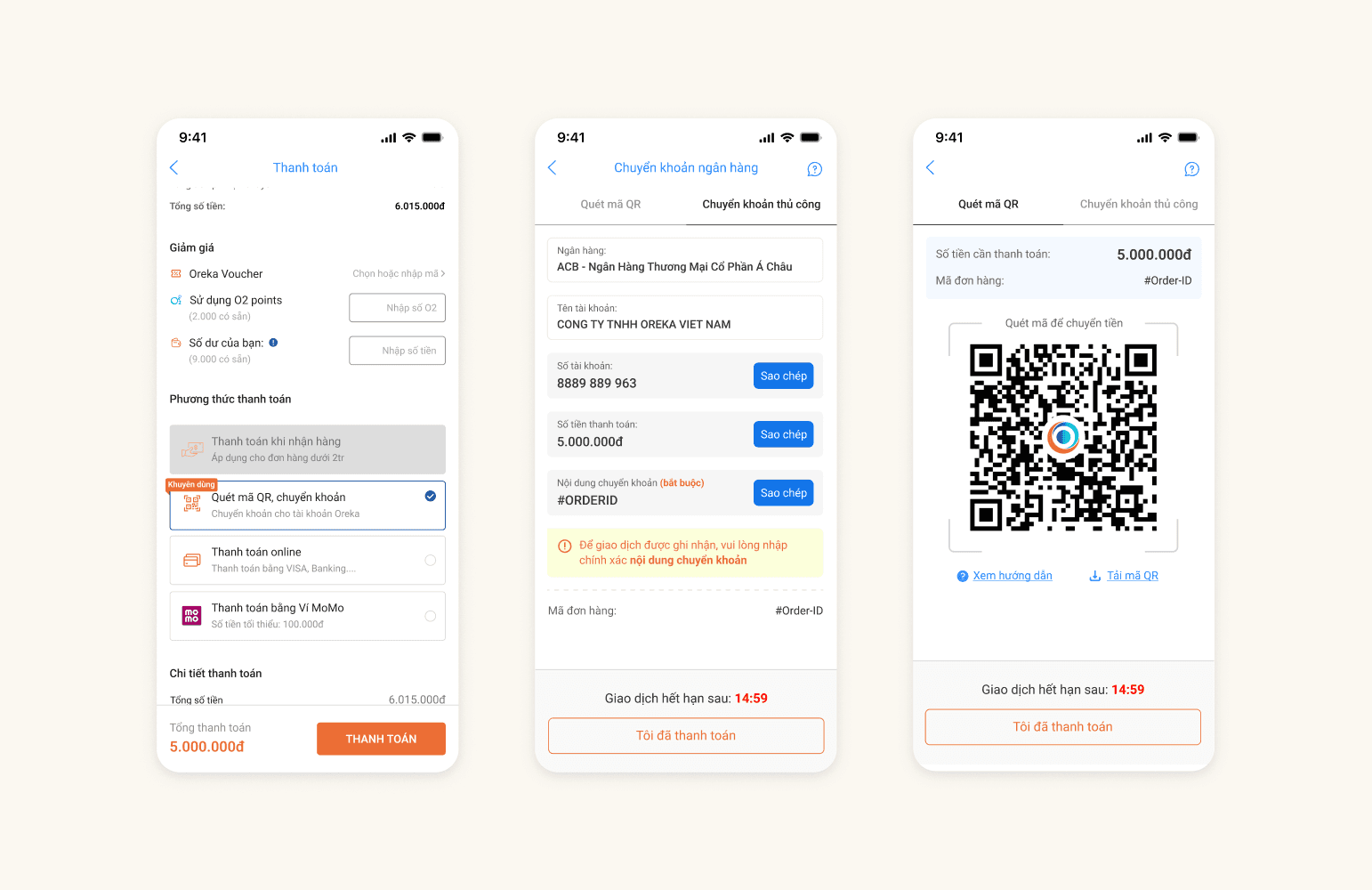
Currently
Oreka offers three payment methods: Cash on Delivery (COD) & 2 online payment ( Momo - a mobile payment service and Visa cards). While COD is fee-free, Momo and Visa incur significant transaction fees, impacting Oreka's profitability, particularly with their increasing focus on higher-value electronics.
- Momo charges 2% per transaction.
- Visa charges 2-5% per transaction, plus an additional 1% fee for buyers.
Business Problems
Data analysis revealed two key issues:
- High COD Cancellation Rate: With a 60% overall cancellation rate, a striking 72% are due to COD payments, compared to only 28% from online payments. This highlights the potential for significantly reducing cancellations by shifting to prepaid online methods.
- High Transaction Fees and User Preference: Of all completed online orders, 75% used Visa, demonstrating a strong preference for bank-linked payment options. This suggests a cost-effective, bank-integrated solution could significantly reduce transaction fees.
Opportunites
The opportunity lay in implementing a cost-effective, bank-based payment solution that aligned with user preferences, increased the proportion of prepaid orders, and minimized transaction fees.
Key metrics
The initial goal for the new payment method was to:
- Online payments increased from 50% to 53.
- Decrease reliance on Momo and Visa, encouraging a shift to the new, more cost-efficient solution.
- One way to track the experience of users after improve the UI is using the CSAT survey.
Discovery Process
To optimize costs, I conducted a streamlined competitor audit and desk research, analyzing direct and indirect competitors and popular payment apps (VNPay, Apple Pay, etc.) to identify effective bank integration strategies
Decision
After careful consideration of business constraints and technical feasibility, a banking QR code payment solution was chosen. This approach offered the best balance of cost-effectiveness and user-friendliness, meeting Oreka's specific requirements.
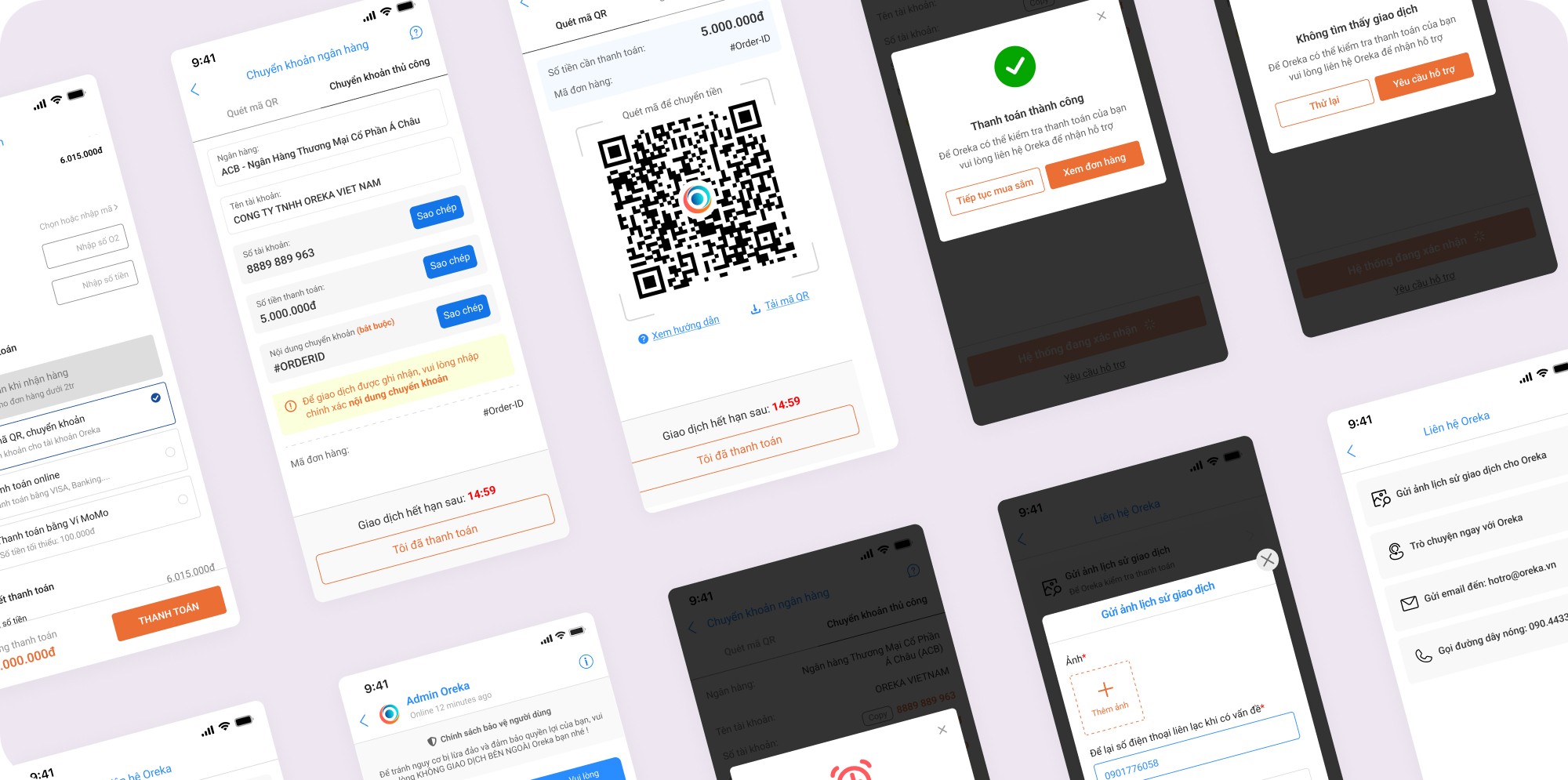
Wireframe and Pre-test
Paper wireframes were created to visualize the QR code payment flow. A usability test, focusing on QR code and manual payment processes, achieved 100% task completion, indicating a positive user experience.
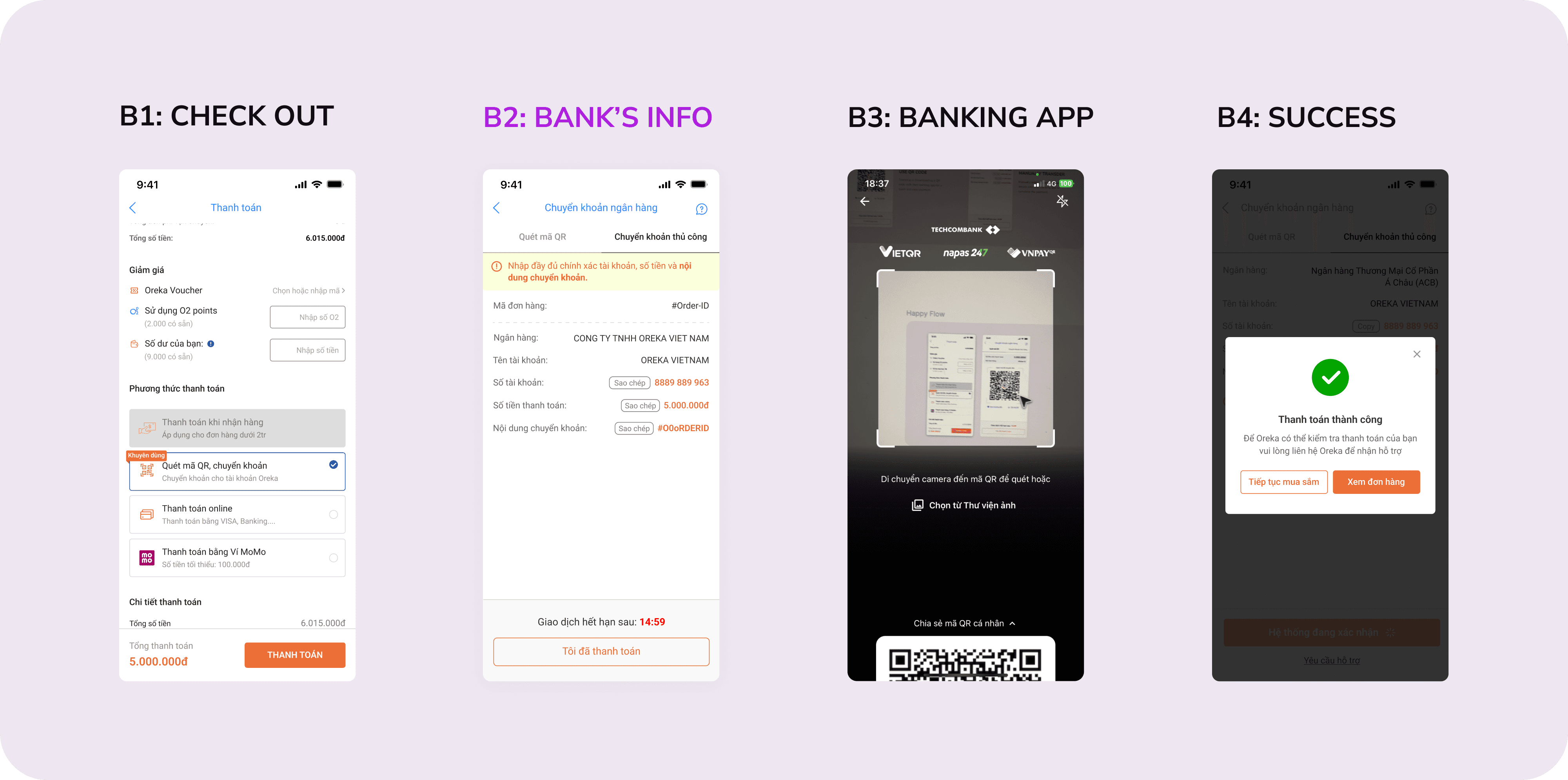
Two bank-transfer options are available
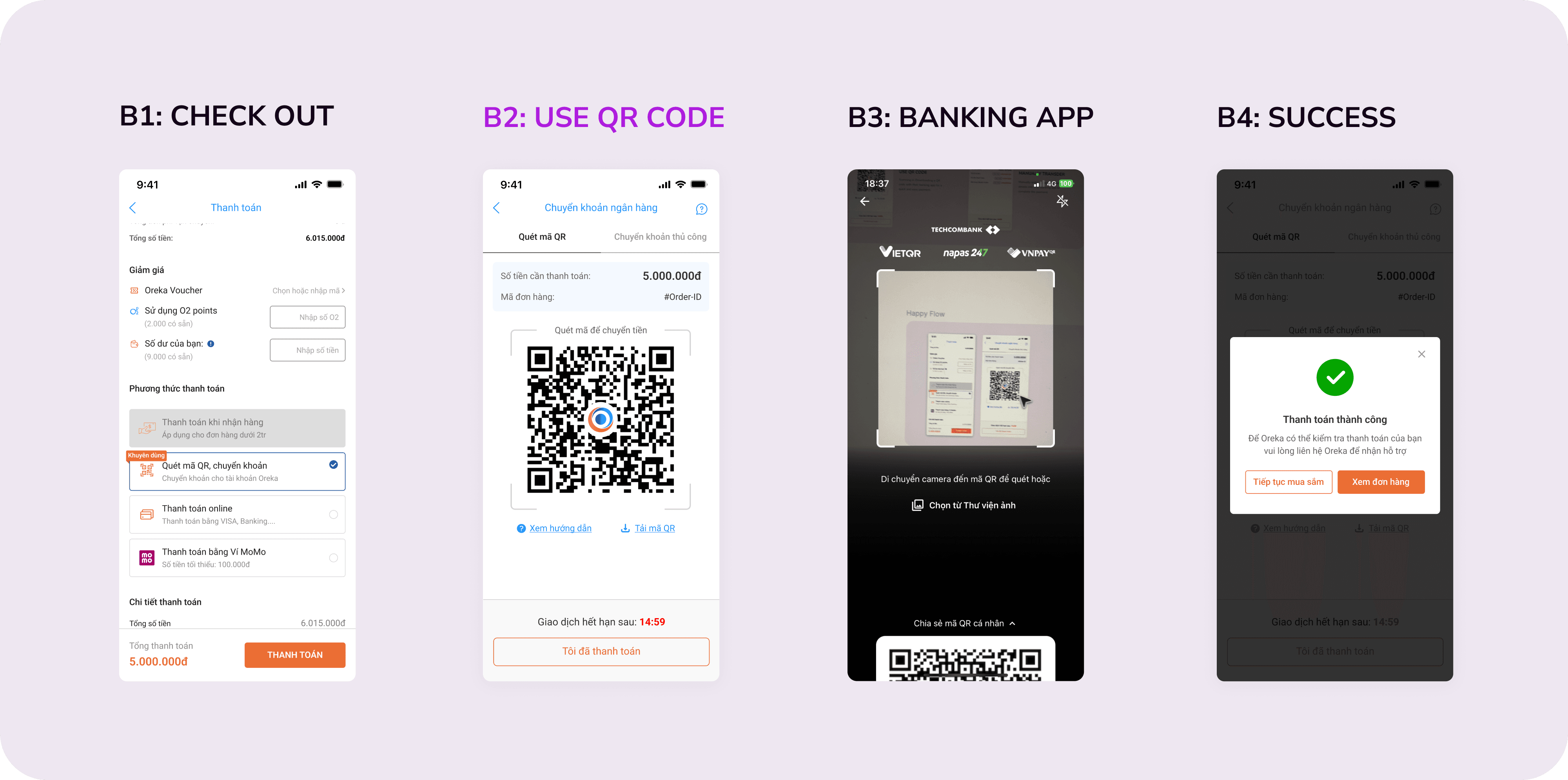
Users can scan a provided QR code using their banking app, or they can manually enter or copy the bank details into their banking app to complete the payment.
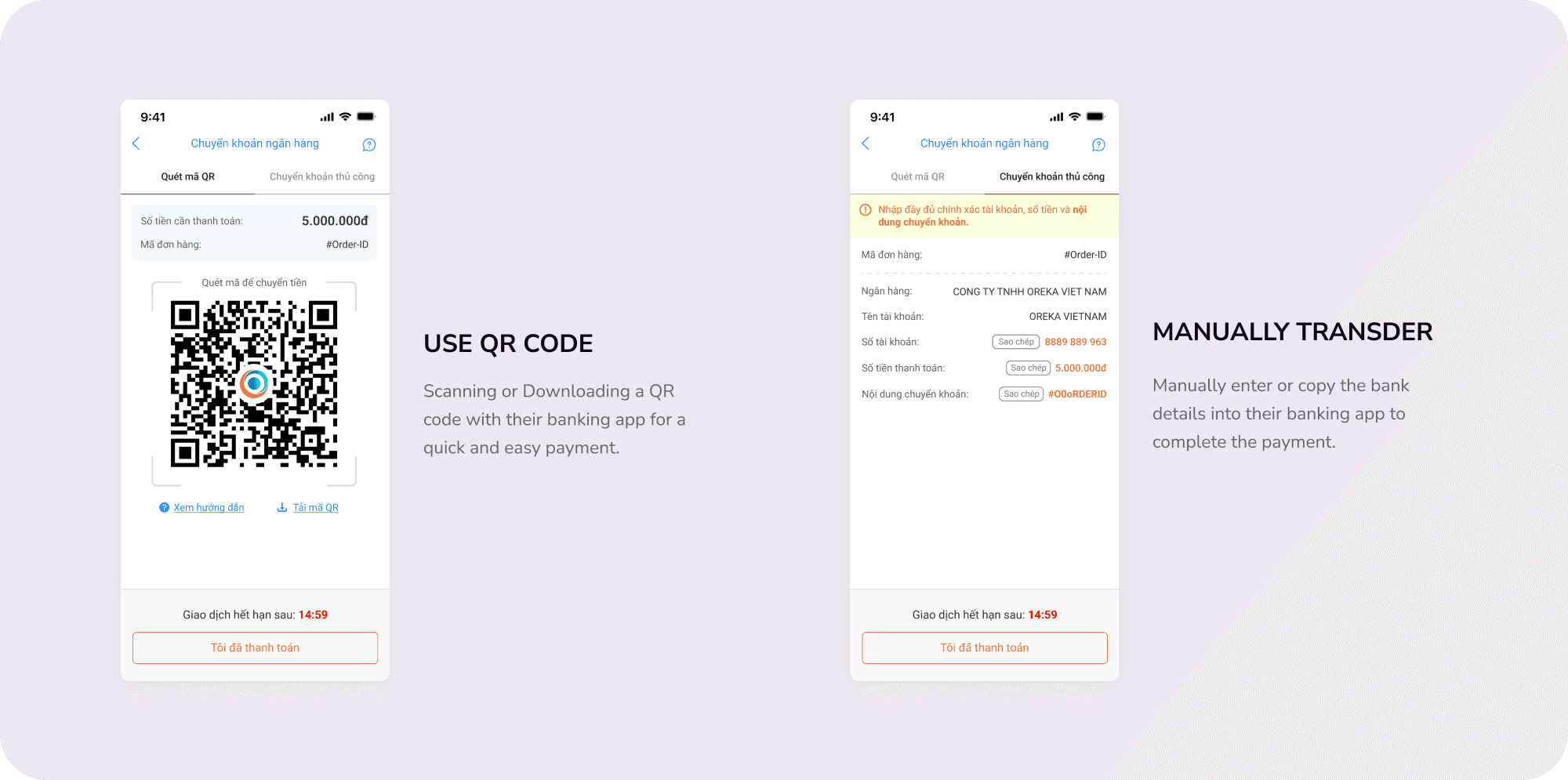
Use QR code
Manually transfer
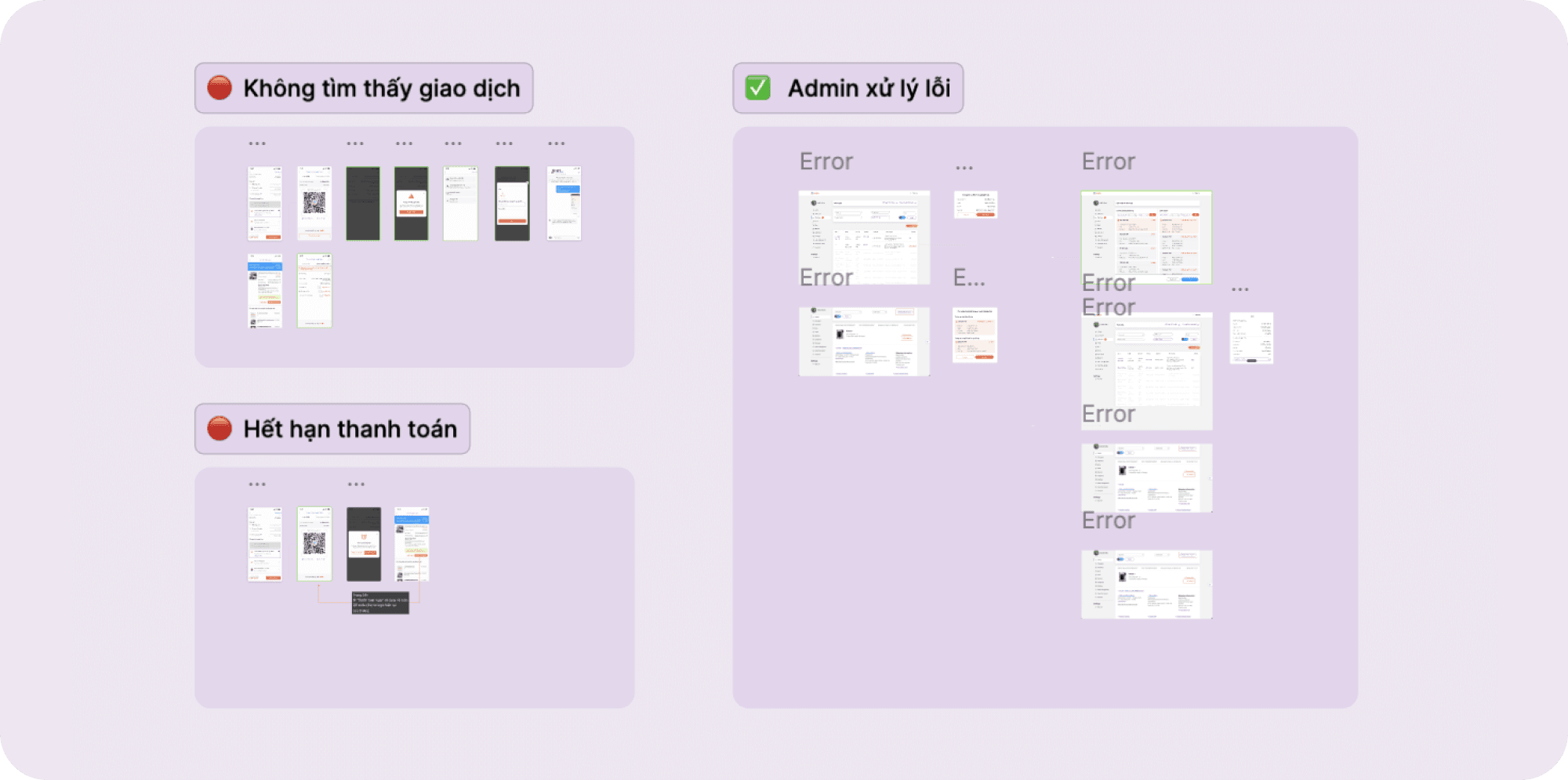
Error
While accurate bank transfer information is essential for order status mapping, we understand that errors can occur. We've built in support for two common issues: incomplete transaction details and mismatched transfer information.
Analysic Metric
- Online Payment Increase: Online payments increased to 53.8%
- Payment Method Shift: Alepay usage dropped to 0%, Momo decreased to 25%, and Banking QR adoption reached 75%, significantly reducing transaction fees
Improvement
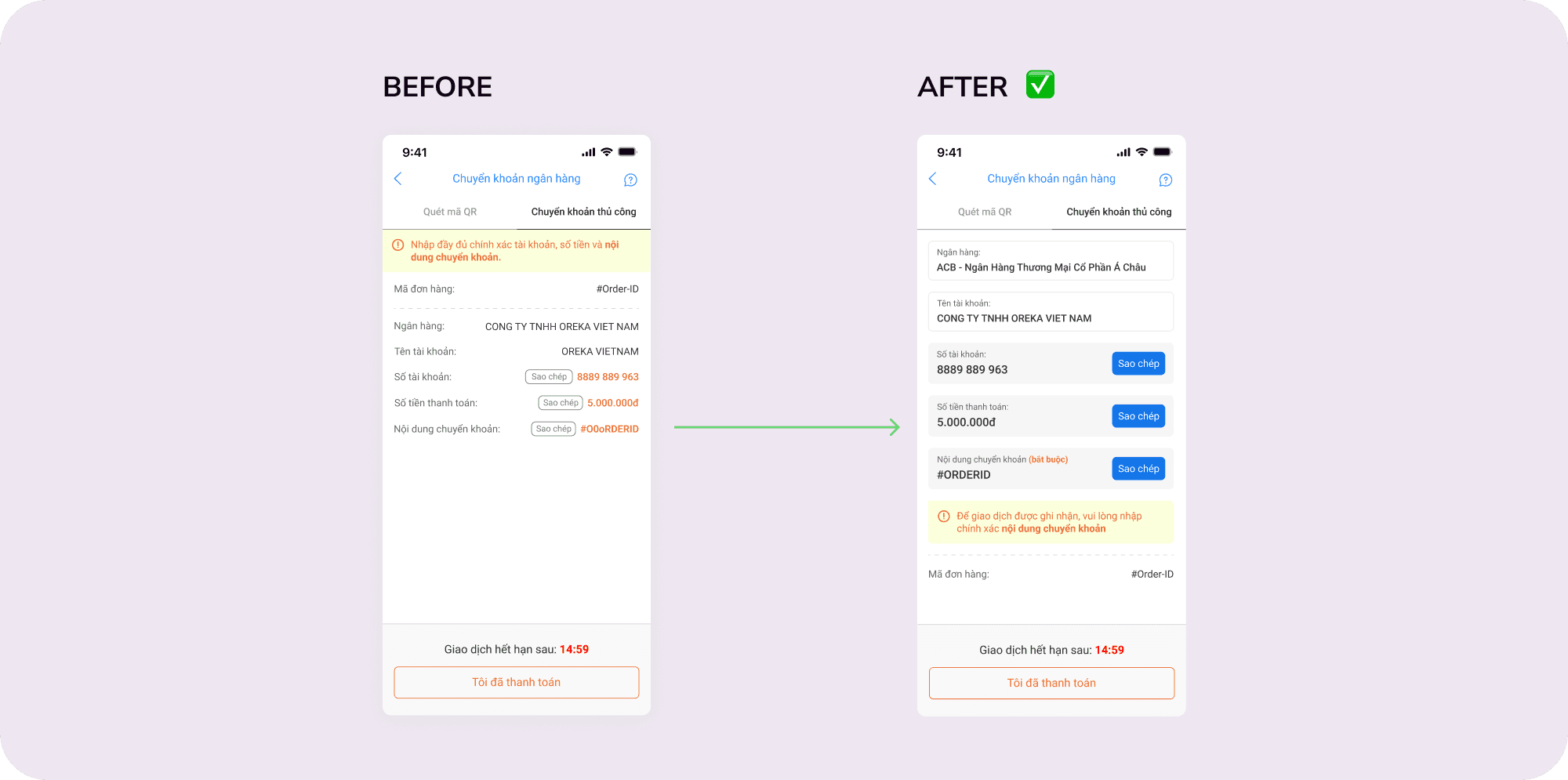
Initial usability testing revealed minor issues with the copy button. These were addressed by redesigning these elements for improved clarity and ease of use.
Lessons Learned
Data-driven design, leveraging low-cost research methods, resulted in a quantifiable result